Jump to a section
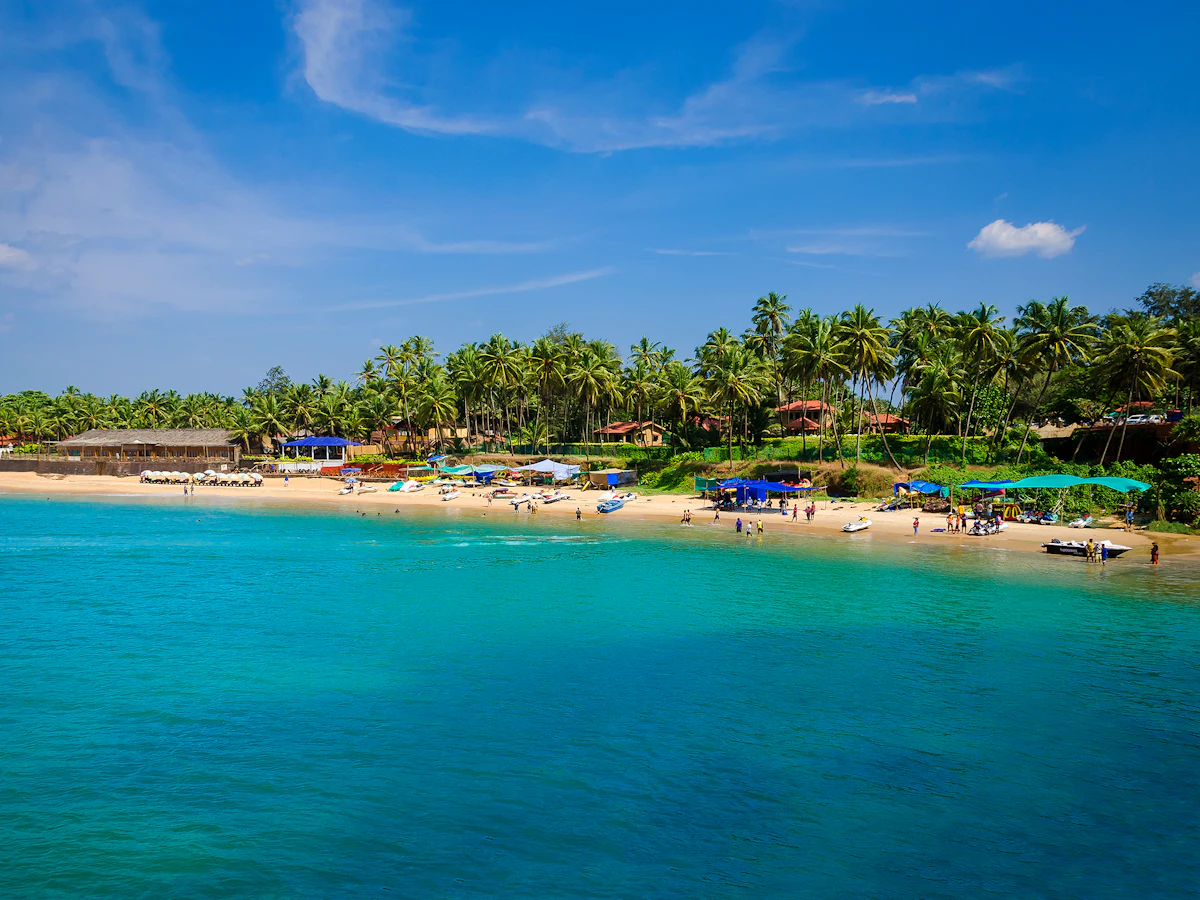
Goa rewards travellers who move on their own schedule. It is a small state — you can drive from the northernmost beach at Querim to the southern tip at Galgibaga in under three hours — but nearly everything worth seeing sits down a side lane that no bus route covers: a spice farm turnoff, a Portuguese-tiled chapel, a beach shack that only locals know about. This guide covers the practical decisions that shape a good Goa trip: how to get around, when to go, which coast suits you, where the quiet beaches are, what to eat, where to sleep, and how much to budget.
We wrote this from the ground, not from a listicle. Royal Goa Ride has delivered self-drive cars and bikes to travellers across Goa for years, and the patterns below come from thousands of real trips — the questions guests ask before they land, and the things they wish someone had told them on day one.
Before you landGetting to Goa
Goa has two airports: Manohar International Airport at Mopa in the north and Dabolim Airport near Vasco da Gama in the south. The state is also served by the Konkan Railway, with stations including Thivim, Madgaon, and Karmali. Check current flight and rail schedules when planning your arrival.
Wherever you land, the smartest first move is arranging your self-drive vehicle before you arrive rather than after. A pre-booked car or bike delivered directly to the airport or your hotel means your holiday effectively starts the moment you land, instead of an hour spent negotiating a taxi fare at the arrivals gate. Most rental providers, including us, ask for basic trip details — arrival time, flight or train number, and drop location — and have the vehicle waiting, fuelled and inspected, when you walk out.
Section 01Getting Around Goa
Public transport in Goa is thin. Buses run infrequently and rarely reach beach lanes or heritage villages directly. Auto-rickshaws and taxis are available near tourist hubs but are priced per trip and add up fast over a multi-day stay, and drivers are not always willing to wait while you explore. For this reason, the overwhelming majority of visitors — Indian and international — choose to self-drive.
A self-drive car or bike changes the shape of a Goa trip entirely. Instead of planning your day around when a taxi is available, you plan around when the light is good for a sunset, when the tide is right for a walk, or when a particular beach shack starts serving lunch. Roads in Goa are generally well-signed on the main coastal highway (NH66) and connecting state roads, though village lanes can be narrow, sandy near the coast, and shared with pedestrians, dogs, and the occasional cow — so unhurried, attentive driving matters more than speed.
Car or bike? A car makes sense for families, for anyone travelling with luggage, for monsoon-season trips, and for longer drives such as Dudhsagar Falls or Chorla Ghat. A bike suits solo travellers and couples who want to slip into narrow beach lanes where parking a car is difficult, and who don't mind sun and rain exposure. Many repeat visitors book a bike for in-town days and a car for the longer day trips.
Fuel stations are common along NH66 and in every major town, so range anxiety isn't really a concern even on a full-day loop. What matters more is parking — beach-facing lanes in peak season (December–January) fill up fast, so arriving early or using a hotel's parking as a base and walking the last stretch is often the smoother choice.
Transport options can vary by area and time. If your itinerary includes quieter villages or less-visited beaches, confirm how you will travel between stops before setting out. A rental can offer flexibility for a multi-stop trip, provided you follow the rental terms and local road guidance.
For area-specific planning, see the Goa airport car-rental guide, North Goa locations and South Goa locations. Confirm airport or accommodation handover arrangements for your exact dates.
Check your planned route for tolls and payment options before travelling. For longer bookings, ask your rental provider whether a mid-trip vehicle check is available and whether it is included.
Hotel and airport delivery
We deliver cars and bikes to hotels and airports during standard delivery hours. Rentals include unlimited kilometres within Goa, subject to the rental terms.
Section 02Best Time to Visit
Goa has three broad seasons, and each produces a genuinely different trip.
November to February — peak season
This is the classic Goa window: dry, sunny days, cool evenings, calm seas, and every beach shack open. It is also the busiest and most expensive stretch, especially around Christmas and New Year, when hotel prices spike and popular beaches get crowded. If you're travelling in this window, book both your stay and your rental vehicle in advance — availability on premium SUVs like the Creta or Fortuner tightens considerably in the last two weeks of December.
March to May — shoulder-to-hot season
Prices drop, crowds thin out, and the sea stays warm, but daytime heat and humidity climb noticeably by April. This window suits travellers who prioritise value and don't mind planning outdoor activities for early morning or late afternoon. Air-conditioned cars become genuinely useful rather than a comfort extra during this period.
June to September — monsoon season
Goa turns a saturated, waterfall-fed green during monsoon, and this is when Dudhsagar Falls and the Western Ghats are at their most dramatic. It's also the quietest, cheapest season, with a completely different, slower character — many beach shacks close, and swimming is restricted due to rough seas. Self-driving is still very doable, but hill routes need a higher-clearance vehicle and more cautious driving.
Late September to October — the quiet sweet spot
Often overlooked, this transitional window offers greenery from the tail of the monsoon, fewer crowds, and softer prices, with weather stabilising by early October. Many repeat visitors consider this the best-kept-secret time to visit.
If you want the classic postcard Goa experience and don't mind crowds and prices, go December to February. If you want value and warm water, go April or September. If you want waterfalls and greenery and can handle rain, go July or August with a proper monsoon plan.
Section 03North Goa vs South Goa
Goa's two coasts have distinct personalities, and choosing the right one — or splitting your time between both — shapes your whole trip.
North Goa (Baga, Calangute, Anjuna, Vagator, Morjim) is where the energy is: beach shacks with live music, night markets, water sports, and a younger, more social crowd. Roads here are busier and beach lanes narrower, so a nimble hatchback or a bike often works better than a large SUV for weaving between Anjuna and Vagator.
South Goa (Colva, Benaulim, Agonda, Palolem) is calmer and more spread out — wider beaches, resort-style stays, and long stretches where the loudest sound is the sea. Distances between points of interest are longer, so a comfortable car with good air-conditioning pays off more here than in the compact north.
First-time visitors chasing the classic Goa reputation usually lean north. Couples and families wanting rest lean south. Many of our guests who have visited before choose to split their stay — a few nights in Calangute or Candolim for the buzz, then relocate south to Agonda or Palolem for the last stretch to unwind, using the same rental vehicle for the whole loop rather than switching transport mid-trip.
Section 04Hidden Beaches Worth the Drive
The famous beaches get the photographs; the quieter ones get the memories. A handful are only realistically reachable by your own vehicle, since taxis rarely wait around for the return trip from a remote cove.
- Kakolem Beach (South Goa) — reached via a short forest path after parking near Cabo de Rama; often nearly empty even in peak season.
- Cola Beach (South Goa) — a freshwater lagoon meets the sea here, a short drive off the main Canacona road, worth combining with Agonda.
- Querim Beach (North Goa) — the northernmost beach, calm and uncrowded, a good final stop before heading toward the Maharashtra border.
- Mandrem Beach (North Goa) — quieter than nearby Morjim, with a gentle river inlet that's popular for sunset walks.
- Butterfly Beach (near Palolem) — technically reachable only by boat or a long trek, but the drive to the nearest viewpoint and jetty is part of the experience.
"Anywhere you need to park and walk five minutes through a coconut grove to reach the sand is usually where the crowd thins out. That five-minute walk is doing most of the filtering for you."
Section 05Food & Where to Eat
Goan food is its own cuisine, distinct from generic "Indian food" menus aimed at tourists — shaped by Konkani coastal tradition and centuries of Portuguese influence. A few dishes worth actively seeking out: fish curry rice (the daily staple, usually kingfish or pomfret in a coconut-tamarind gravy), xacuti (a roasted-spice curry, often chicken), vindaloo (properly made, it's tangy and garlicky rather than simply "spicy"), bebinca (a layered coconut-jaggery dessert), and feni (the local cashew or coconut spirit, best tried in moderation and with food).
For an honest meal, look slightly inland from the busiest beach strips. Shacks directly on the most photographed stretches of Baga and Calangute cater heavily to quick tourist turnover; a five-minute drive to a village-facing restaurant in Candolim, Assagao, or Majorda often gets you the same dishes at better quality and lower prices, cooked for locals rather than for a menu board.
Breakfast in Goa deserves its own mention. Look for a poi (a soft local bread) with ros omelette, or a plate of sanna — steamed, slightly sweet rice cakes traditionally paired with a spicy pork or chicken curry called sorpotel. Café culture has grown fast in villages like Assagao and Siolim, with sourdough, cold brew, and all-day breakfast menus alongside the traditional options — a useful middle ground if your group has mixed preferences on any given morning.
Markets are worth building into your food itinerary too. The Wednesday flea market at Anjuna and the Saturday night market near Arpora both mix street food with shopping, and the fish market at Margao is the place to see where the day's catch actually comes from before it reaches a shack menu. If you're self-driving, arriving at a market by mid-morning avoids both the heat and the thickest crowds.
Section 06Where to Stay
Where you sleep should follow from what you want your days to look like, not the other way around.
Calangute / Candolim — the most convenient base for first-timers: central, well-served, close to both nightlife and a wide beach, with easy access north and south by car.
Anjuna / Vagator — better for a younger, more independent crowd who want cliffside views, flea markets, and easy access to Chapora Fort and the sunset points nearby.
Assagao / Siolim — increasingly popular for travellers who want a boutique, design-led stay away from the beach crowd but still a short drive from it.
Agonda / Palolem (South) — best for slow mornings, yoga, and beaches without loudspeakers.
Whichever base you choose, request hotel-delivery for your rental vehicle rather than arranging pickup separately — it removes an entire logistics step from your first day and means your trip effectively starts the moment you land.
Section 07Budgeting Your Trip
Trip costs vary with season, accommodation, dining choices, and transport. Build a budget around your own itinerary, and use the trip cost estimator on the homepage to select a vehicle and rental duration and review the base rental estimate before you book.
Section 08A Few Notes on Local Etiquette
Goa is relaxed by Indian standards, but a handful of small courtesies go a long way. Swimwear belongs on the beach, not in village lanes, markets, or restaurants set back from the water — a cover-up or T-shirt for the walk between is appreciated. Churches and temples expect shoulders and knees covered, and photography inside active places of worship should be approached with the same restraint you'd bring anywhere else. When visiting spice farms, homestays, or smaller family-run guesthouses, a little extra patience and a friendly hello tend to open doors — literally and otherwise — that a purely transactional approach doesn't.
On the road specifically, Goa's driving culture runs on patience and eye contact rather than strict lane discipline. A wave of acknowledgment after someone lets you merge, or a slow, visible stop at an unmarked junction rather than asserting right of way, keeps the unwritten system working smoothly for everyone.
Section 09What to Pack
- Light, breathable clothing plus one light layer for early morning drives or hill routes
- A valid driving licence (and International Driving Permit if you're a foreign national)
- Reef-safe sunscreen — reapply more than you think you need to
- A dry bag or waterproof pouch for phones and cash if you're near water often
- Cash in smaller denominations for shacks and village stalls that don't take cards
- A rain layer if travelling June–September
Ready to explore Goa on your own schedule?
Browse our full fleet — hatchbacks from ₹1,200/day to premium SUVs — with free hotel and airport delivery.


